

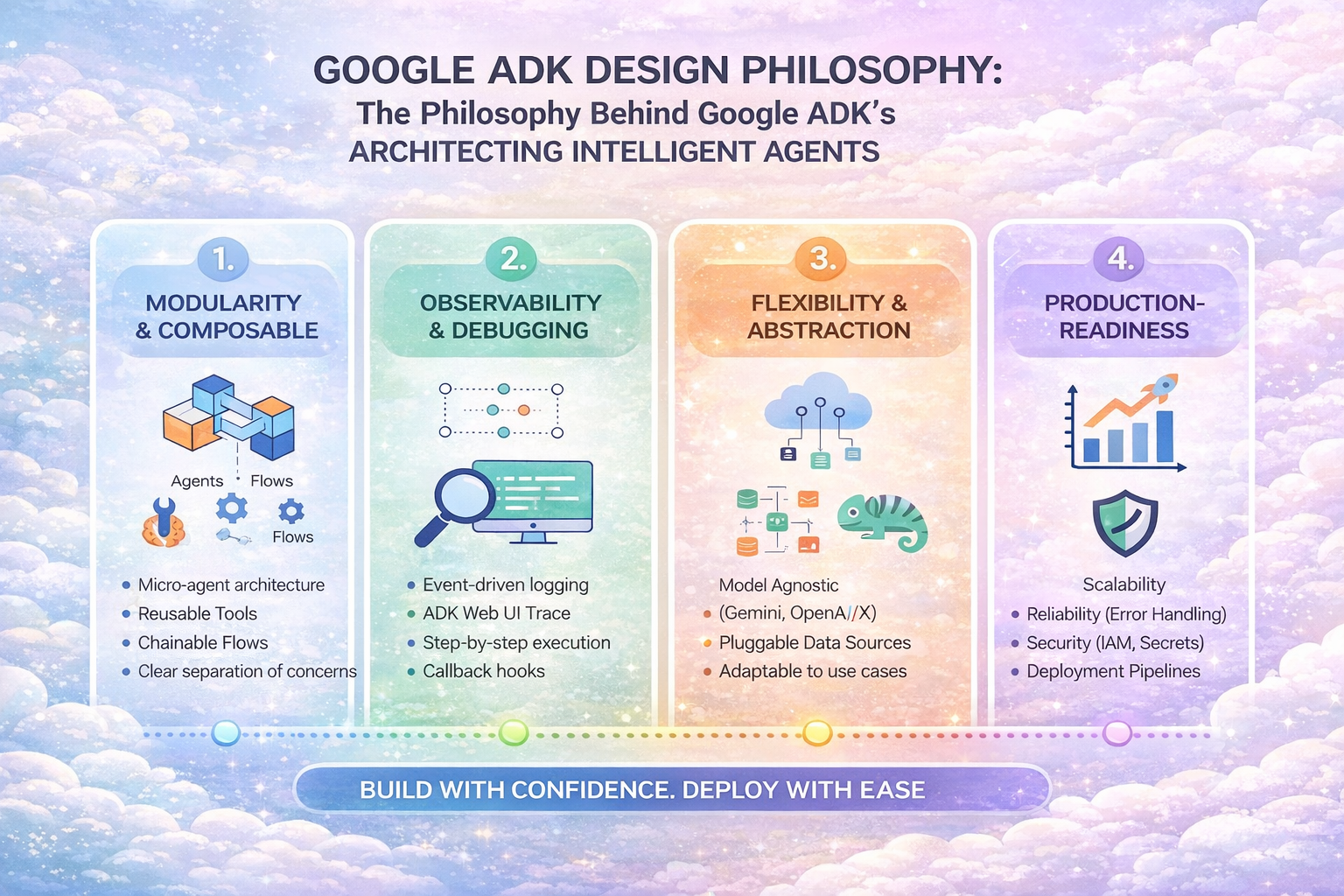
Why Google built their AI agent framework the way they did — and what it means for developers.
When Google released the Agent Development Kit (ADK), they didn't just ship another AI framework. They made a statement about how AI agents should be built.
After spending weeks building with ADK, I've come to appreciate the thoughtful design decisions baked into this framework. Let me walk you through the philosophy that makes ADK different.
1. Agents as First-Class Citizens
Most frameworks treat agents as an afterthought — just a loop around an LLM. ADK flips this entirely.
In ADK, the Agent is the core primitive. Everything else — tools, memory, models — plugs into the agent. This isn't just semantics. It changes how you think about your code.
# A simple ADK agent
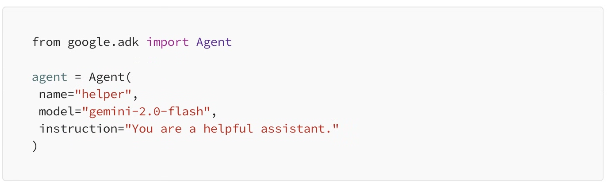
That's it. Three lines and you have a working agent. No boilerplate. No ceremony.
2. Tools Should Be Just Functions
Here's where ADK really shines. Want to give your agent a tool? Just write a Python function:
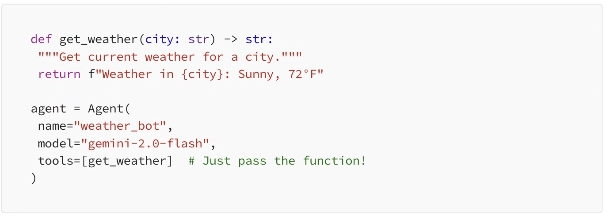
ADK inspects your function's signature and docstring automatically. No schemas to write. No decorators required. Your existing Python code becomes an agent tool with zero modifications.
This is the Unix philosophy applied to AI: do one thing well and compose.
3. Multi-Agent Systems Made Simple
Complex problems need multiple specialized agents. ADK makes this natural:
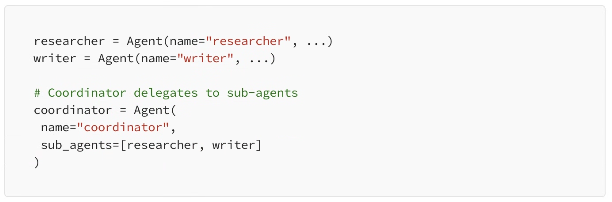
The coordinator automatically knows how to delegate to sub-agents. No routing logic to write. No message-passing protocols to implement.
4. Sessions Handle the Messy Stuff
Real conversations need state. ADK's Session object handles this elegantly:
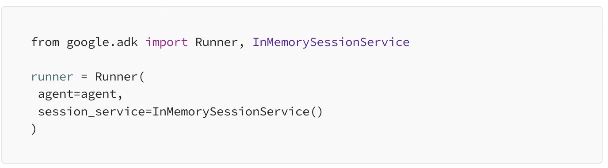
Sessions persist conversation history, track state between turns, and can be swapped for different backends (in-memory, database, etc.) without changing your agent code.
5. Model Context Protocol (MCP) Integration
This is the forward-thinking part. ADK supports MCP out of the box, meaning your agents can connect to external tools and services through a standardized protocol.
Think of it like USB for AI agents — plug in any MCP-compatible service and it just works.
The Big Picture
Google's philosophy with ADK comes down to three principles:
1. Minimize boilerplate. If you're writing plumbing code, the framework failed.
2. Embrace Python conventions. Functions, type hints, and docstrings should be enough.
3. Scale naturally. Single agents and multi-agent systems use the same patterns.
ADK isn't trying to be everything. It's trying to be the simplest path from idea to working agent. And in my experience, it delivers.
The best framework is one that gets out of our way. ADK does exactly that.
Leave A Comment